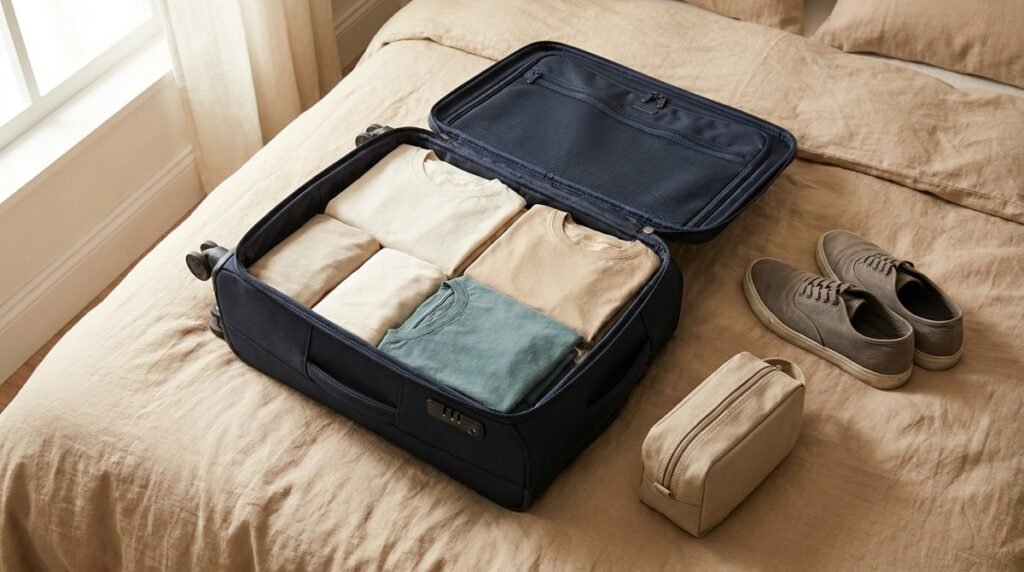
A lighter bag starts with a more specific plan. Instead of asking what you might possibly need, ask what you expect to do, what conditions you will face and what you can wash or repeat. The aim is not to travel with the smallest possible number of items. It is to carry a useful set that fits your actual journey.
Begin with days, climate and activities
Count travel days, not just hotel nights. Then check the forecast close to departure and think about the range of conditions. “Warm” can still involve cool evenings or strong air conditioning; a cold destination may include warm indoor spaces. A general climate setting is a prompt to think, not a forecast.
List the activities that really need different clothing or equipment. A beach afternoon, business meeting and mountain walk do not call for the same extras. If an activity is only a vague possibility, decide whether it is worth taking specialist gear, renting it or leaving it out.
Build around repeatable outfits
Choose items that work together and can be worn more than once where appropriate. For an illustrative five-day mild-weather trip, you might start with five tops, two versatile bottoms, one light layer, underwear and socks for each day, sleepwear and your main walking shoes. That is a starting set, not a rule for every traveler.
Adjust it for comfort, cultural expectations, access needs, personal preferences and the actual schedule. Formal events or specialized activities may change the list. The generator cannot know those details unless you add them yourself.
Use laundry as a real assumption
For longer trips, laundry can reduce the amount of everyday clothing you carry. But it only helps if you have time, access and suitable drying conditions. Our generator caps everyday quantities at a seven-day cycle when laundry is selected. If you cannot confidently wash and dry clothes, do not rely on that assumption.
Check accommodation facilities or local laundry options before building the whole plan around them. Include any small laundry items you genuinely need, but do not turn a space-saving idea into another bag of equipment.
Keep essentials easy to identify
- Documents: the travel and booking information relevant to your journey.
- Everyday carry: phone, charging cable and suitable power arrangements.
- Personal care: the toiletries and personal essentials you normally use.
- Clothing: a practical base set, layers and activity-specific additions.
- Useful extras: items such as a reusable bottle where permitted.
Check official rules for documents, medicines, restricted goods and transport security. Airline baggage limits and liquid restrictions vary; a generated checklist is not permission to carry an item. Personal medical needs should be considered with suitable professional guidance rather than a generic travel list.
Pack by person, then identify shared items
The Packing List Generator suggests items for one traveler. For a group, avoid multiplying things that can sensibly be shared, such as a compatible charging accessory or some toiletries. At the same time, do not make one bag the only place for every essential. Agree who is carrying shared items and what happens if bags are separated.
Do a final bag check
Lay out the items, remove duplicates and check the bag’s size and weight against your carrier’s actual allowance. Wear or carry appropriate travel-day clothing and keep necessary documents accessible. Leave a little room rather than planning a suitcase that only closes with perfect folding.
Use the generator to create a starting checklist, edit the items and tick them as you pack. Add your own entries for specific needs. Print or download before leaving the page because the tool does not save automatically. Pair the checklist with a day-by-day itinerary to spot activities that require a particular item.
Quick questions
Does every traveler need a separate checklist?
Usually that makes personal essentials easier to check. Keep a separate note for genuinely shared items and assign responsibility clearly.
Should I pack for every possible weather change?
Plan for the expected range and realistic contingencies. Suitable layers can be more versatile than many separate outfits, but local conditions and your activities should guide the final choices.